
The Verified Venice City Directory Shelf
The firmest local evidence is R. L. Polk & Co.'s named Sarasota and Venice publication. An institutional inventory extends that evidence across three discrete years. Earlier regional books and later telephone listings help bridge gaps, but none should be described as a complete Venice sequence. Ask staff to confirm a title and year before planning a visit or citing a volume.
| Collection | Verified years | Where held | Access route |
|---|---|---|---|
| Polk's Sarasota and Venice City Directory | 1955; institutional run 1955-1957 | State Library catalog and genealogy libraries | Catalog or staff shelf check |
| Sarasota-area directories | 1916, 1918, 1926-1930, later discrete issues | UF Digital Collections, State Library, institutions | Online where digitized or on site |
| Sarasota telephone books | 1949-1963; July 1986 issue | Library of Congress and institutions | Collection search or reading room |
| Venice Gondolier | Range shown in live archive | Venice Historical Resources | Search newspaper backfile |
| History Center | Broad local collection | Temporary Osprey Library service | Staff request; notice for remote pulls |
No anonymous official catalog exposed every Venice print or reverse-directory year. That limit is not evidence of an unbroken run.
Ask for a Venice Polk Volume Shelf Check
The State Library city-directory collection spans the early twentieth century to the present and arranges volumes by city, then year. Its Reference Desk at 850-245-6682 can verify a Sarasota/Venice title and format. Give the place, publisher, and target years, and ask whether a street section is included.
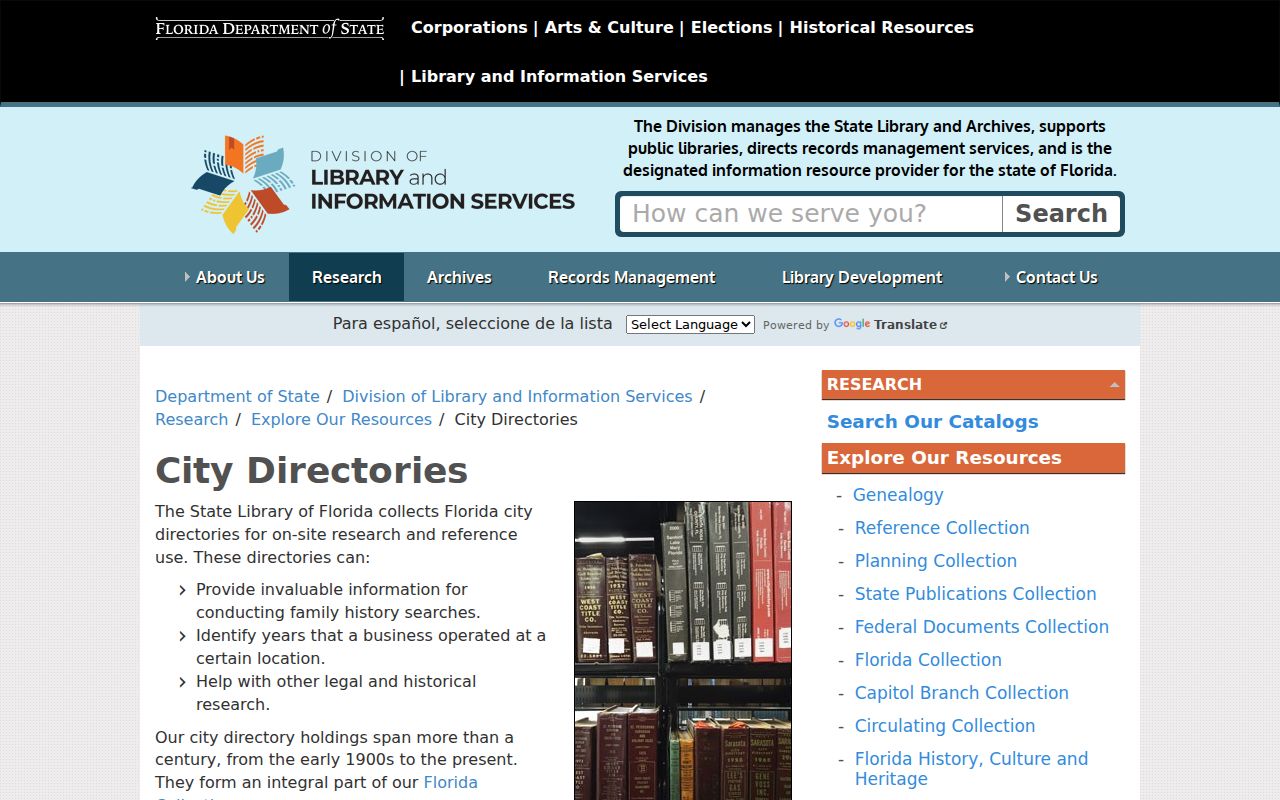
A precise request prevents a regional title from being mistaken for full city coverage.
Decode a Venice Printed Entry
Copy the entry exactly. A Polk-style line begins with surname and given name or initials, may put a spouse in parentheses, then compresses occupation, employer, and address. Business lines may identify a proprietor, manager, partners, location, and telephone. The volume's own key controls every symbol.
| Name | Surname, name or initials; spouse may follow, while early lines may say only “and wife.” |
|---|---|
| Work | Abbreviated occupation or employer, such as clerk, manager, carpenter, or proprietor. |
| Address | h means house, rms rooms, and bds boards in inspected material. |
| Business | Firm, operator, street address, telephone, and sometimes an advertisement reference. |
| Street side | When present, street and number reverse the name-first order to occupant or subscriber. |
- Criss-cross directory
- A section arranged by street and number, not surname; not every edition has one.
- Householder index
- An address list connecting a dwelling with a listed householder for that publication year.
- Abbreviation key
- The publisher's legend; read it before assigning meaning to any shortened term.
The Winter-Address Quirk in Venice Directories
Early Sarasota-area material used (w) beside some northern winter addresses. In that inspected run it signals a seasonal pattern, while “wid” in many Polk keys means widow. The two are easy to confuse. Venice's history as a winter destination also means a missing summer appearance or second northern address need not show a permanent move.
Preserve both places as hypotheses until dated sources establish their relationship.
Venice Names Before Incorporation
The 1916 and 1918 Bradentown, Manatee, and Sarasota books contain people tied to the Sarasota-Venice Company. Venice incorporated as a town in 1926 and became a city in 1927, so those entries document regional development, not later house-by-house coverage. Sarasota County was created in 1921 from southern Manatee County, shifting the keeper for older deeds, marriages, probate, and court material.
1916 and 1918: Regional books include Sarasota-Venice Company ties.
1921: Sarasota County is created; earlier trails may remain in Manatee records.
1926-1929: Incorporation and original plats establish the modern street framework.
1955-1957: The verified Polk Sarasota/Venice run supplies clear directory evidence.
This sequence keeps an early regional mention from being overstated as proof of a household inside later limits.
Trace a Venice Household Across Directory Years
A printed volume is one dated layer in a larger proof chain. Begin with the closest known year and never fill a publication gap with assumption.
- Copy the full entry, abbreviations, spouse, work, and address.
- Check adjacent available years, allowing for nonpublication, death, non-subscription, or a move.
- Use the street section, when present, to compare numbers and nearby names.
- Pair entries around 1940 and 1950 with public census schedules.
- Use the Gondolier, death evidence, probate, and deeds to explain a disappearance.
Federal personally identifiable census schedules open after 72 years, so 1960 remains closed until 2032. Directory occupants can be renters absent from deed rolls, while owners can live elsewhere. Keep occupancy and ownership as separate timelines.
Companion Sources for Venice Listings
Telephone books from 1949 through 1963 and a discrete July 1986 issue can supply subscriber names, addresses, and numbers when no directory year is confirmed. Sarasota marriages from 1921-1953, testamentary records from 1921-1928, public census schedules through 1950, obituaries, church registers, and probate can add relationships. Some FamilySearch images require login, center access, or an affiliate library.
Yearbooks are a better former-classmate trail than a current school list. Venice-Nokomis High School's first graduating class in 1930 had eight students. Alumni archives and Gondolier school items connect a name with a period without implying present residence.
Local Archives Behind Venice City Directories
Venice Historical Resources works from the restored Triangle Inn at 351 Nassau Street South. The building moved through boarding-house, wartime lodging, apartment, home, and office uses before surviving demolition pressure, being relocated, and becoming the museum and archive. Its photographs, register files, planning history, and Gondolier archive add context no bare line supplies.
For preservation help, contact museum@venicefl.gov or 941-486-2487; the Historical Resources Manager is at 941-486-2490. The Venice Area Historical Society can identify community publications, but access and fees should be confirmed. Present membership is not public merely because officer contacts are visible.
The Historical Society website introduces that resource.
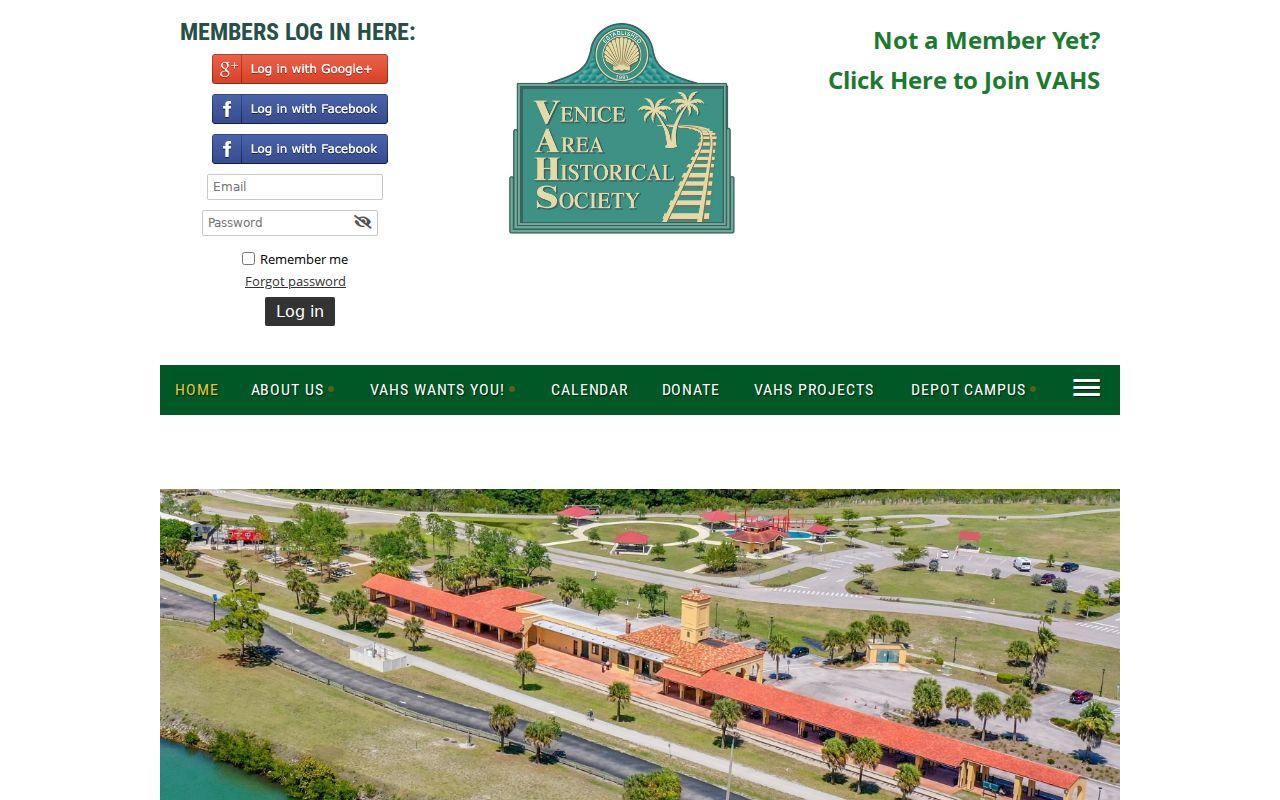
Ask a focused question naming a person, organization, street, and period.
Digital Clues Beyond the Printed Shelf
Florida Memory provides selected photographs, documents, and maps.
The History Center supplies maps, manuscripts, newspapers, photographs, and drawings from temporary quarters at Osprey Library, 337 North Tamiami Trail, 941-861-6090. Remote material needs advance notice. A 2025 gift of $100,000 added large-format equipment and a Memory Lab, but that lab digitizes family media rather than operating as a people index.
What Old Venice Listings Cannot Prove
A listing proves that a publisher associated a name or subscriber with an address in that edition. It does not prove continuous residence, title, every household member, or present occupancy. Initials can merge people, spouses may be omitted, and street sections may not exist. Confirm important conclusions with a census, deed, certificate, probate file, or dated newspaper.
For modern confirmation, the Venice resident lookup guide shows how to compare official indexes without treating a shared name as identity proof.
The Gondolier Explains Venice Directory Gaps
A person who vanishes from one printed volume may have died, moved, changed a listing, stayed seasonally, or simply gone unpublished. The Venice Gondolier archive supplies dated obituaries, social notes, arrival and departure notices, school items, civic-club activity, property news, and business changes that can distinguish those paths. Search the person's name with a spouse, street, subdivision, employer, or organization. Optical character recognition can misread initials and surnames, so try spelling variants and browse a likely issue date when keyword search fails.
An obituary is family-submitted secondary evidence. Confirm a reported death with the official index or certificate and use Sarasota probate to identify a filed personal representative or interested party. A real-estate notice can explain an address change, but the deed and its legal description establish the recorded transfer. This source pairing is especially valuable in Venice because the verified local run is discrete rather than annual. Newspapers provide narrative between editions without pretending to replace the missing books.
Venice Historic Properties as Directory Case Studies
City Historical Resources publishes address-specific histories for Hotel Venice at 200 North Nassau Street, Blalock House at 241 South Harbor Drive, Levillain-Letton House at 229 South Harbor Drive, Senator Copeland House at 710 Armada Road South, Triangle Inn at 351 Nassau Street South, and Nassau House at 500 Nassau Street South. These narratives show how a name, street address, architecture, deed event, and public association can be tested together. They are contextual research, not title evidence, so match each story to clerk instruments and parcel data.
The Nassau House history records a speculative early Venezia Park home later lost to back taxes during the Depression. That episode explains why a listed occupant and deed owner may diverge or why a name disappears after an economic event. World War II adds another layer: Venice Army Air Base brought more than 5,000 personnel and support infrastructure. Temporary military residents may surface in newspapers, photographs, and base history while never appearing as owners. The Municipal Mobile Home Park Clubhouse, added to the Local Register in 2024, is the only air-base building still in its original location.
Use these named properties as method models. Start with the dated city history, locate the parcel and legal description, inspect deeds, then compare the directory, newspaper, permit, and photograph evidence. Keep each source's role explicit.